Shevaan

Shevaan Jayasinghe

Intelligence depends on power. The path is the stack: electricity that cannot be stored, machines that turn heat into work, compute treated as scarce inventory, software that matches a trade, checks the risk, and settles it, and markets that put a price on what is scarce — including, next, intelligence itself. Energy → Hardware → Compute → Software → Markets.

I have priced electricity, and I have built the software that settles it. Intelligence starts after that.

Open a layer. Then a project.

Back to Energy All layers

Technical co-founder2023–2026PrototypeEnergy

Energy · 2023–2026Pre-launch

US power and natural gas

I built a venue where a hedge on US power or US natural gas can stay open around the clock, settle immediately, and sit fully on collateral. It was ready to launch. It had not taken a live order.

Key points

  • Round-the-clock venue for US power and Henry Hub
  • Instant settlement, fully on collateral
  • Launch-ready; no live order
  • Twenty firms committed to the hedge book
Price feeds ERCOT · CME · ICE Order book bridge, not the core Risk Margin · liquidation Settlement Instant · collateral A stale or outlier feed stops the trade.
The path a hedge has to walk. If the mark is bad, it does not print.

KPI

20 firmsCommitted to the hedge book
$80–100mA month, committed. Not volume.
$2m raisedCapital to build the venue
NoneLive orders. Pre-launch, on purpose

Chart

Committed hedges $80–100m / month Live volume None
The long bar is signed commitment. The short bar is traded volume. They are not the same number.
The underlying. Fuel becomes power. The project is the contract on top of that path, not a plant I operated.

Report

Status
Pre-launch. Launch-ready. No live order flow.
Market
US power on the Texas grid (ERCOT) and US natural gas at Henry Hub.
Product
Perpetual swaps and futures. Open around the clock. Instant settlement. Fully backed by collateral.
Role
Technical co-founder and chief product officer. Design leads and front-end, plus two people on back-end and DevOps.

What I built

I integrated a C++ order book into twelve Go services. I did not write the matching core. I wrote the bridge into Go, carried prices that can go negative, and fixed stops that failed when the market gapped. Negative prices matter on a grid that sometimes has too much generation.

The mark had to agree across ERCOT, CME, and ICE. A stale or outlier feed failed closed, so a bad price could not become a trade. Liquidation was rebuilt so three races could not double-charge a position: one admission gate, a drain that has to finish, and a key so the same episode cannot run twice.

I built a research-grade margin engine: a scenario scan of the book, and a clearing-style initial margin (the collateral required up front). I also described the cloud platform in about 4,900 lines of Terraform. Coding models were allowed near this build only through a five-stage loop: research, a written spec, implementation, evaluation, another pass. Two founders. A person approved anything that touched rules, risk, or money.

Inferred. I designed a Henry Hub index as the reference price, with a live calculation and a fallback if a feed died. The CV marks this as an earlier design, not fully checked against the current code.

What the numbers are

Twenty trading firms committed to a hedge book of about $80–100 million a month. I raised $2 million. A local test saw a typical slow reply around 4 milliseconds at about 1,000 orders a second.

What this does not claim

  • No live orders, and the committed book is not traded volume.
  • The 4 millisecond figure is a lab gate, not production throughput.
  • The margin engine is not a live clearing house.
  • Terraform was applied to a staging account, not production.
  • A UK innovation pathway, a Bermuda Class T application, and a place in the FCA Digital Sandbox. That is a file and a cohort. A licence was not granted.

Next project in this layer · Back to Energy · All layers · shevaanjayasinghe@gmail.com
Back to Markets All layers

Custody platform2022–2023LiveMarkets

Markets · London · 2022–2023Production

Tri-party collateral

I shipped a collateral platform that real institutions used. Assets under custody reached $300 million. One connection then opened four outside venues.

Key points

  • Production custody platform, used by institutions
  • $300 million assets under custody
  • One connection opened four outside venues
  • Product and delivery manager
Collateral is inventory. The platform moves it to a venue and settles it.

KPI

$300mAssets under custody
~$750kSetup cost taken out
+80%Liquidity clients could reach
+20%Trades that settled straight through

Chart

Liquidity clients could reach +80% Straight-through processing +20%
Bar length is the size of the change, not the level it started from. Dollars sit in the figures above, because $300 million and $750 thousand are a different axis.

Report

Status
Production. Institutional clients. Client assets actually in custody.
Role
Product and delivery manager. Ten engineers, three business lines, up to four streams at once.
Venues
One connection into Coinbase, Circle, Deribit, and Liquid.

What I built

A tri-party collateral platform: the client, the venue, and the custodian, with the collateral moving between them without a fresh setup each time. I then turned that into one productised connection so a client could reach four outside venues instead of four separate integrations.

What the numbers are

Assets under custody grew to $300 million. Setup cost fell by about $750,000. Clients could reach roughly 80% more liquidity. The share of trades that settled without a person stepping in rose by 20%.

What this does not claim

  • This is a live custody system. It is not the energy venue, and it is not a promise about later books.

Next project in this layer · Back to Markets · All layers · shevaanjayasinghe@gmail.com
Back to Markets All layers

Fund shares2015–2018LiveMarkets

Markets · 2015–2018Live

Fund creation and redemption

I worked the primary market for fund shares: authorised participants create and redeem so the product stays in line with what it holds. I automated the order entry.

Key points

  • Primary-market create and redeem
  • Automated the order entry
  • Live — client money moving
Authorised participant Create / redeem order automated Shares track the holdings
Primary market. The share is created or redeemed against the basket, not left to drift.

KPI

−50%Manual steps in order entry
$5mRevenue, first three months, EMEA
−15%Funding cost, from the dashboard
LiveClient money moving

Chart

Manual steps, before 100 Manual steps, after 50
The CV states a 50% cut, not the raw step count. The bars are that ratio. Index 100 means “what the desk did by hand before.”

Report

Status
Live. This is creation and redemption, with client activity.
Role
Analyst, then senior analyst, on the primary market for fund shares. Salt Lake City, then London.
Place
EMEA launch.

What I built

Order entry for creating and redeeming fund shares, automated so the desk touched the order half as often. A funding dashboard so the cost of funding the book was visible, and then lower.

What the numbers are

Manual touchpoints fell by 50%. The EMEA activity brought in $5 million of revenue in the first three months. Funding cost fell by 15%.

What this does not claim

  • The $5 million is creation and redemption revenue. It is not a claim about a lending book.

Back to Markets · All layers · Next project in this layer · Securities financing · shevaanjayasinghe@gmail.com

Back to Markets All layers

Securities financing2018–2022LiveMarkets

Markets · London · 2018–2022Live

Securities financing

I owned the day on securities financing: capturing the trade, holding the collateral, and getting it to settle. The reconciliation that ate the week was the thing I removed.

Key points

  • Trade capture, collateral, and settlement
  • About 40 hours of reconciliation removed each week
  • Live financing book
Trade capture Collateral Settlement
Front to back. The break was the reconciliation between these steps.

KPI

~40 hrsReconciliation removed, each week
~2.5 hrsCut from settlement
+20%Straight-through on the new platform
~$5mOriginated. Three analysts.

Chart

Reconciliation removed ~40 hours / week Settlement was cut by ~2.5 hours, and straight-through rose 20%. Those are different units, so they are not drawn on this bar.
One axis, one fact. The other two results are in the figures, not squeezed onto a scale that would hide them.

Report

Status
Live financing book. London.
Role
Associate, then senior associate. Led three analysts.

What I built

A reconciliation tool for the financing book, and then a platform launch that took time out of settlement and raised the share of trades that went straight through.

What the numbers are

About 40 hours a week of reconciliation came out. Settlement got about 2.5 hours faster. Straight-through processing rose by 20%. I helped originate about $5 million of new revenue.

What this does not claim

  • Older desk-efficiency percentages that the CV retired are not on this page.

Back to Markets · All layers · Next project in this layer · Tri-party collateral · shevaanjayasinghe@gmail.com

Back to Compute All layers

Product2024–nowLiveCompute

Compute · Sri Lanka · 2024–nowLive

Chappie

I shipped an iPhone app that spends a model on every speaking session. It coaches spoken English for students, professionals, and IELTS candidates, and scores the session like an exam band.

Key points

  • Live iPhone coach for spoken English
  • Scores a session like an exam band
  • 350+ subscribers; 4.7 / 5 on the App Store
Speak Recognise Score exam-style band
A model call on every session. This is a product people use. It is not a GPU cloud I operated.

KPI

350+Subscribers
~18 minA typical session
4,500+Following
4.7 / 5App Store

Chart

App Store rating 4.7 / 5
4.7 divided by 5 is the length of the bar. Subscribers, session length, and following are different units, so they stay in the figures.

Report

Status
Live on the App Store.
Role
Founder and technical lead.
Stack
iOS, speech recognition, and a language model that scores the session.

What I built

Chappie listens to a person speak and returns a band the way an English exam would. The session is the product. People stay in it for about 18 minutes.

What the numbers are

350+ subscribers. About 4,500 people following it. 4.7 out of 5 on the App Store.

What this does not claim

  • I have not run a compute market or a GPU fleet. The model here is a product feature, not a power contract.

Back to Compute · All layers · Next project in this layer · Yard planning · shevaanjayasinghe@gmail.com

Back to Compute All layers

Prototype2023PrototypeCompute

Compute · 2023Prototype

Yard planning

I prototyped how a container terminal should stack boxes. The input was 16 months of real operations, not a toy table.

Key points

  • Sixteen months of real terminal operations
  • Prototype for how a yard should stack boxes
  • No accuracy is claimed
16 months of operations Model Yard plan how to stack
Python. A gradient-boosted model. The question was where the next container should sit.

KPI

16 monthsOf terminal operations
One yardContainer terminal
XGBoostThe model family
PrototypeNot a claimed accuracy

Chart

Dataset window 16 months
This bar is how long the history is. The CV does not state an accuracy, so none is drawn.

Report

Status
Prototype, 2023.
Data
Sixteen months of container-terminal operations.

What I built

A model for yard planning: given the history of the terminal, test how the yard should be stacked. Separate from Bahut, which is a pricing app. The CV still asks whether the two share a theme. Until that is confirmed, they stay two projects.

What this does not claim

  • No accuracy, no lift, and no production terminal is stated in the CV.

Next project in this layer · Back to Compute · All layers · shevaanjayasinghe@gmail.com

Back to Compute All layers

OwnerPrototypeCompute

ComputePT-Series

Quantum-optimised routing prototype

Route-price jobs ran on real ORCA PT-Series hardware. I owned the logistics app, the database, the pricing logic, the discrete-event model of vessel and container flows, and the packaging as a prediction service. I did not design or build the quantum computer.

Key points

  • Route-price jobs ran on real ORCA PT-Series hardware
  • Owned the logistics app, database, pricing, model, and packaging
  • Did not design or build the quantum computer
INPUTS Query / request Batch job Vessel state OWNED LAYER App + DB Price Model service logic flows Packaged prediction service Jobs on PT-Series hardware OUTPUTS Route prices Service result Not the QC I did not design or build the quantum computer.
The app, the database, the pricing logic, the discrete-event model, and the packaging. Jobs ran on real PT-Series hardware. The computer is not mine.

KPI

On the deviceRoute-price jobs on ORCA PT-Series hardware
The modelDiscrete-event vessel and container flows
The appDatabase and pricing logic
The servicePackaged as a prediction service

Chart

Route-price jobs On the PT-Series
The jobs ran on the hardware. I did not design or build the computer. No speedup against a classical solver is stated.

Report

Hardware jobs
Quantum-optimisation for route prices ran on real ORCA PT-Series hardware.
Mine
The logistics app, the database, the pricing logic, the discrete-event vessel and container model, and the packaging as a prediction service.
Not mine
The quantum computer. I did not design it or build it.

Software

  • Packaged the model as a deployable prediction service.

What this does not claim

  • I did not design or build the quantum computer.
  • No revenue, no volume, and no result against a classical solver.

Back to Compute · All layers · Next project in this layer · Tumour delineation capstone · shevaanjayasinghe@gmail.com

Back to Compute All layers

Capstone2026PrototypeCompute

Compute · 2026One engagement

Tumour delineation capstone

COMP5703, group CS-24-2, “From Detection to Delineation.” One project. The model, the data path, the delivery, and the compute stay in separate parts. I have not claimed a segmentation gain.

Key points

  • COMP5703. One engagement, in four parts
  • Task 4: anatomy and failure analysis
  • No validated segmentation gain

Machine learning

My pair’s work is Task 4: anatomy and failure analysis for pancreatic tumour delineation. Broad removal of anatomy can take true tumour with the false positives. The client asked for a local, distance-based test instead. No report-guided training had been run, and no improvement was established.

KPI

COMP5703Group CS-24-2
Task 4Anatomy and failure analysis
No gainNo validated segmentation improvement
CT onlyReports supervise training. Inference is the scan.

Chart

Validated segmentation gain None recorded
Week 6 called the small-sample tests inconclusive. Week 7 recorded no successful method. Teammates’ Dice scores are not mine.

Data path

The project uses radiology reports to supervise training and CT as the inference input. The file I can point to is a Stage 0 geometry audit: one public kidney-tumour mask, used to check the mechanics. It is not a pancreatic result.

KPI

1 maskKiTS19 case_00000, MedOtte
1 lesion18,491 tumour voxels
7,824 mm³Volume of that mask
26 Aug 2026Downloaded for the audit

Chart

Masks in the Stage 0 audit 1
summary.json and lesions.csv. Three rows are three diameter assumptions on that one lesion, marked as counterfactuals, not measurements taken from a report. The provenance file says this is not evidence about pancreatic morphology.

Devops

I took the budget. Platform, training hours, storage, and a justification, consolidated by task. Billing exports were being collected. No new paid run was authorised.

KPI

By taskPlatform, hours, storage
ReceiptsCollected, not a finished ledger
No new runThe lab did not authorise more spend
Not the podsTraining-pipeline writeups are teammates’

Compute

The university GPU the group expected was unavailable. The client offered 100 dollars toward experiments. Currency, access, and storage coverage were not settled, and the offer had not been received. The capstone files do not name GCP.

KPI

No university GPUThe expected cluster was unavailable
100 dollarsOffered. Not received.
GCPNot named in the capstone files
Spend pausedThe group stopped further personal spend

Report

Source
Week 6 and Week 7 minutes, the 9 September 2026 proposal, and the Stage 0 audit in Drive folder CAPSTONE-5703.
Mine
Task 4, the minutes, the client questions, the cost consolidation, and the Stage 0 audit files.
Not mine
Teammates’ report counts, Dice scores, and RunPod pipelines. Those stay off this page.

What this does not claim

  • No segmentation score, and no GCP project. A Google Cloud account email is not this capstone.
  • Not Yugadanavi, not the ReGreen plant, and not the US power venue.

Back to Compute · All layers · Next project in this layer · Chappie · shevaanjayasinghe@gmail.com

Back to Software All layers

Technical co-founder2023–Apr 2026PrototypeSoftware

Software · 2023 – Apr 2026Staging

Sphinx

I was technical co-founder and chief product officer. The deck describes a blockchain derivatives exchange. The master CV retires the on-chain throughput story. What the code grounds is an off-chain platform on AWS, applied to staging.

Key points

  • Derivatives exchange platform on AWS
  • About 4,900 lines of OpenTofu / Terraform
  • Applied to staging, not production

Blockchain

The Sphinx deck says the exchange uses blockchain technology. A strategy note calls it a blockchain protocol for energy derivatives. The master CV supersedes the older on-chain claims: not Avalanche, not 10,000 transactions a second, not sub-second finality.

AWS

I designed the platform as about 4,900 lines of OpenTofu and Terraform. Eight modules, three environment stacks. It was applied to a staging account, not production.

KPI

~4,900 linesOpenTofu / Terraform
EKSPrivate endpoint, Kubernetes 1.33, ARM64
AuroraPostgreSQL, private subnets
StagingNot production

Chart

Applied to staging Yes Production No
Master CV, confirmed 17 June 2026. Terraform owns AWS. A shell owns Kubernetes. Safe to re-run in part.
The shape of a service platform. Not a trace from the staging account.

Report

Also on AWS
Custom VPC and eight endpoints. Lambda and API Gateway. CloudFront and S3. Two KMS keys. IRSA for JWT signing. SSM-only bastion. GitHub-OIDC runners.
Role
Technical co-founder and chief product officer, 2023 to April 2026. Design leads and front-end, plus two people on back-end and DevOps.
Market
The US power and natural gas venue stays the Energy project. The committed book is not repeated here.

What this does not claim

  • Not production. No live orders. I did not write the matching core.
  • The retired on-chain numbers stay retired.
  • Not the capstone.

Back to Software · All layers · Next project in this layer · Bahut · shevaanjayasinghe@gmail.com

Back to Software All layers

Founder2023–2025LiveSoftware

Software · London · 2023–2025Shipped

Bahut

I founded a logistics pricing app. The first version was up in two months. Route-price jobs ran on real ORCA PT-Series hardware. I built the database and the pricing logic. I did not design or build the quantum computer.

Key points

  • Logistics pricing app
  • First version in two months
  • Closed December 2025
Routes ORCA PT-Series Price Jobs ran on the PT-Series. I owned the data and the pricing logic. I did not build the computer.
Route-price jobs ran on real ORCA PT-Series hardware. I did not design or build that computer.

KPI

2 monthsTo the first version
PERNPostgres, Express, React, Node
ORCAPT-Series, for route prices
ClosedDecember 2025

Chart

Time to first version 2 months
A short build, drawn as a short bar. Pricing performance is not in the CV, so it is not charted.

Report

Status
Founded in London, 2023. First version in two months. Wound down December 2025.
Role
Founder. Database and pricing logic.

What I built

A Postgres, Express, React, and Node app for logistics prices, plus a predictive pricing pipeline. Route-price jobs ran on real ORCA PT-Series hardware. I owned the database and the logic that turns a route into a price. I did not design or build the computer.

What this does not claim

  • No revenue, no volume, and no claim that the quantum step beat a classical price.
  • Not the same project as the container-yard prototype, unless I later say they are.

Back to Software · All layers · Next project in this layer · Prediction-market detector · shevaanjayasinghe@gmail.com

Back to Software All layers

Detector2024–nowPrototypeSoftware

Software · 2024–nowResearch

Prediction-market detector

I built a detector that tries to tell informed flow from noise on Polymarket. It reads volume, how fast orders arrive, and how much a trade moves the price. It has been backtested on history.

Key points

  • Detector for informed flow against noise
  • Three signals: volume, arrival, impact
  • No hit rate is in the CV
Volume Arrival rate Price impact
Three things the detector is allowed to read. Equal boxes, because the CV does not rank them.

KPI

3 signalsVolume, arrival, impact
HistoryBacktested
No hit rateNot in the CV
Open2024 to now

Chart

Hit rate Not in the record Left blank. A backtest is not a score I am willing to draw.
The CV says the detector was backtested. It does not give a hit rate, a return, or a sample size. The chart stops there.

Report

Status
Research, 2024 to now. Backtested on historical markets.
Market
Polymarket.

What I built

A detector for informed flow versus noise. The inputs are volume, the rate at which orders arrive, and the price impact of a trade. The horse-racing book below failed first. This detector is what that failure was for.

What this does not claim

  • No hit rate, no profit, and no live capital allocated on the back of it.

Back to Software · All layers · Next project in this layer · Horse-racing signals · shevaanjayasinghe@gmail.com

Back to Software All layers

Signals2023–2024PrototypeSoftware

Software · 2023–2024Failed first

Horse-racing signals

I built a signal on horse-racing markets. More than fifty features, thousands of races, tested walk-forward so the past could not cheat. The first version failed.

Key points

  • Fifty-plus features
  • Tested walk-forward
  • The first book failed
50+ features Walk-forward First book failed Lesson prediction market
The failure is the result. It is why the prediction-market detector exists as its own project.

KPI

50+Features
ThousandsOf races
Walk-forwardThe test
FailedThe first book

Chart

Features in the model 50+ Result of the first book: failed. No strike rate is in the CV.
The bar is the size of the feature set. It is not a performance chart. Drawing a profit line here would be invented.

Report

Status
2023–2024. Closed. First version failed.
Test
Walk-forward, on thousands of races.

What I built

A feature set of more than fifty inputs, and a test that walks forward through time instead of scoring the same races it trained on. The book did not hold up. I kept the lesson and used it on the prediction-market detector.

What this does not claim

  • No strike rate and no profit. The honest result is the failure.

Back to Software · All layers · Next project in this layer · Trading bot · shevaanjayasinghe@gmail.com

Back to Software All layers

Live ordersLiveSoftware

SoftwareLive orders

Trading bot

I ran a bot that did the whole path: a signal, a position size, and a live order. The CV records that path. It does not record a return.

Key points

  • A signal, a position size, and a live order
  • The order actually sent
  • No return is claimed on this page
Signal Size Live order
The whole path ran. That is the project. The result of the path is not in the CV.

KPI

SignalThe view
SizeThe position
Live orderIt actually sent
No returnLeft off the page

Chart

Return Not in the record Blank on purpose.
A live order is not a track record. If a return is not written down, it does not get a line.

Report

Status
Live execution. No published return.
Path
Signal, then size, then an order that actually went out.

What I built

A bot that did not stop at a paper signal. It sized a position and sent a live order.

What this does not claim

  • No return, no hit rate, no drawdown. Those numbers are absent, not forgotten.

Next project in this layer · Back to Software · All layers · shevaanjayasinghe@gmail.com

Back to Energy All layers

PlantPlantEnergy

EnergyPlant

Yugadanavi

I have worked heat rate and outages at Yugadanavi, a 300 MW combined-cycle. Gas turbines and steam, with industrial cooling. Lived constraints, not slides.

Key points

  • 300 MW combined-cycle
  • Worked heat rate and outages
  • Lived constraints, not slides
Combined-cycle path: gas turbine → heat recovery → steam → grid. The shape of the plant, not a measured outage chart.

KPI

300 MWCombined-cycle
Heat rateWorked it. No figure recorded here.
OutagesWorked them. No count recorded here.
Gas + steamIndustrial cooling

Chart

Nameplate 300 MW
The only number is the size of the plant. I have worked heat rate and outages at Yugadanavi, a 300 MW combined-cycle. Neither has a figure here.

Report

Status
Time on the plant. Lived constraints, not slides.
Plant
Yugadanavi. 300 MW combined-cycle. Gas turbines and steam. Industrial cooling.
Work
I have worked heat rate and outages at Yugadanavi, a 300 MW combined-cycle.

What I did

I have worked heat rate and outages at Yugadanavi, a 300 MW combined-cycle. Gas turbines and steam, with industrial cooling.

What this does not claim

  • No heat-rate figure, no outage count, and no year. Those are not on the page because they were not in the source sentence.
  • Not the Sri Lanka ReGreen plant. Not the US power venue.
  • Not in the master CV. No plant file was found. The sentence is the original site fact.

Back to Energy · All layers · Next project in this layer · Sri Lanka ReGreen plant · shevaanjayasinghe@gmail.com

Back to Energy All layers

Financial model2024PrototypeEnergy

Energy · 2024One plant, two stages

Sri Lanka ReGreen plant

One Sri Lanka plant on ReGreen equipment. I modelled it twice: a 3.4 MW case, then a revision the file calls ~15 MW. Same waste intake. Different generation, capital, and return. Not a plant I operated.

Key points

  • One plant, modelled at 3.4 MW, then ~15 MW
  • Financial model — not a plant I operated
  • Same waste intake; different generation and capital

Stage 1 · 3.4 MW model

I built the bankability model for a plant that takes municipal waste, makes pellets, and exports electricity. The equipment list is ReGreen’s. The cash flows are mine.

KPI

3.35 MWNet power exported
24.6 GWhEnergy export a year
USD 33.3mInvestment, before interest during construction
12.7%Project return, 20 years

Chart

Project return 12.7% Equity return 10.2%
Both bars use the same 0–25% scale, from Financial Analysis-Regreen-SJ-Jan 2024. This is the 3.4 MW file, not the later revision.

Figures

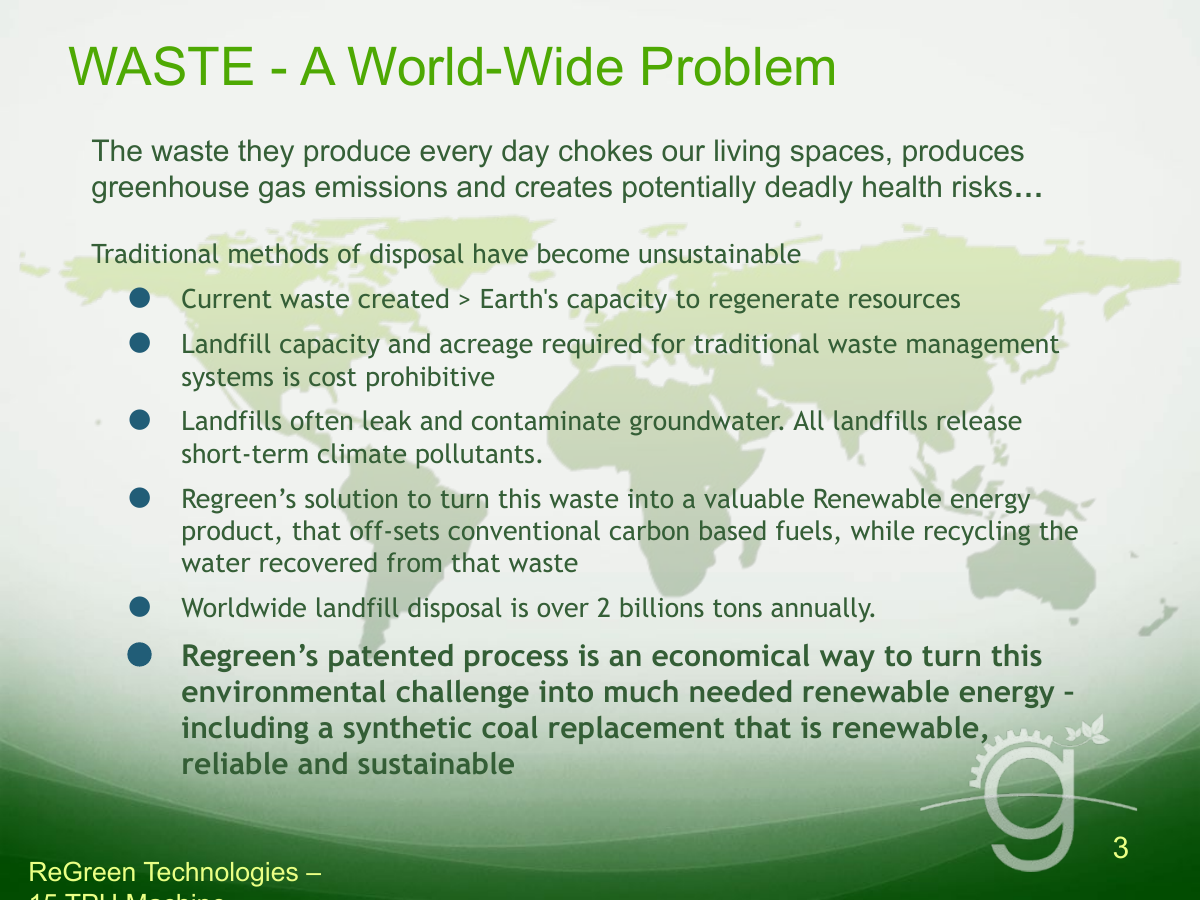
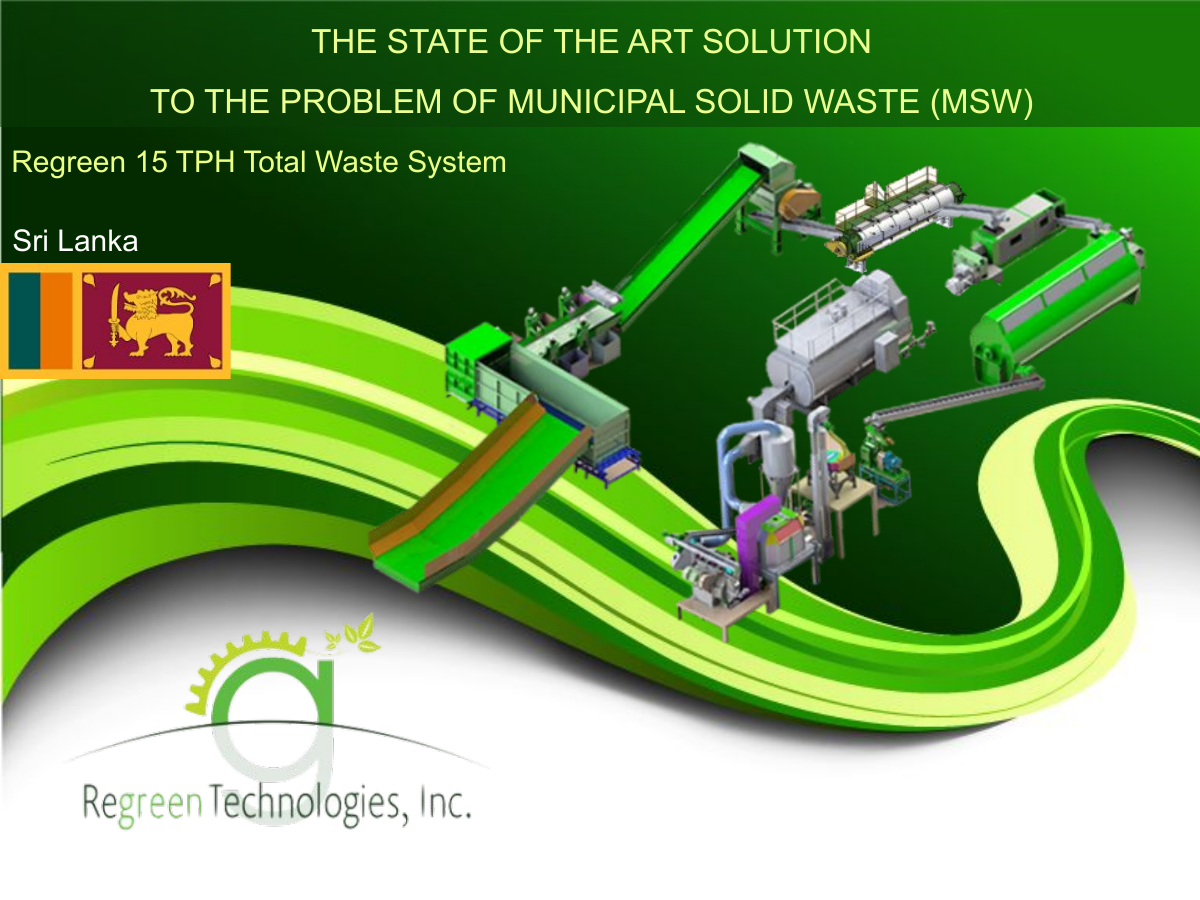
ReGreen process: sort waste, make pellets, burn them for electricity
Vendor diagram of the line: sort, pelletise, burn. The tariff, the loan, and the return are in the model, not on this slide.
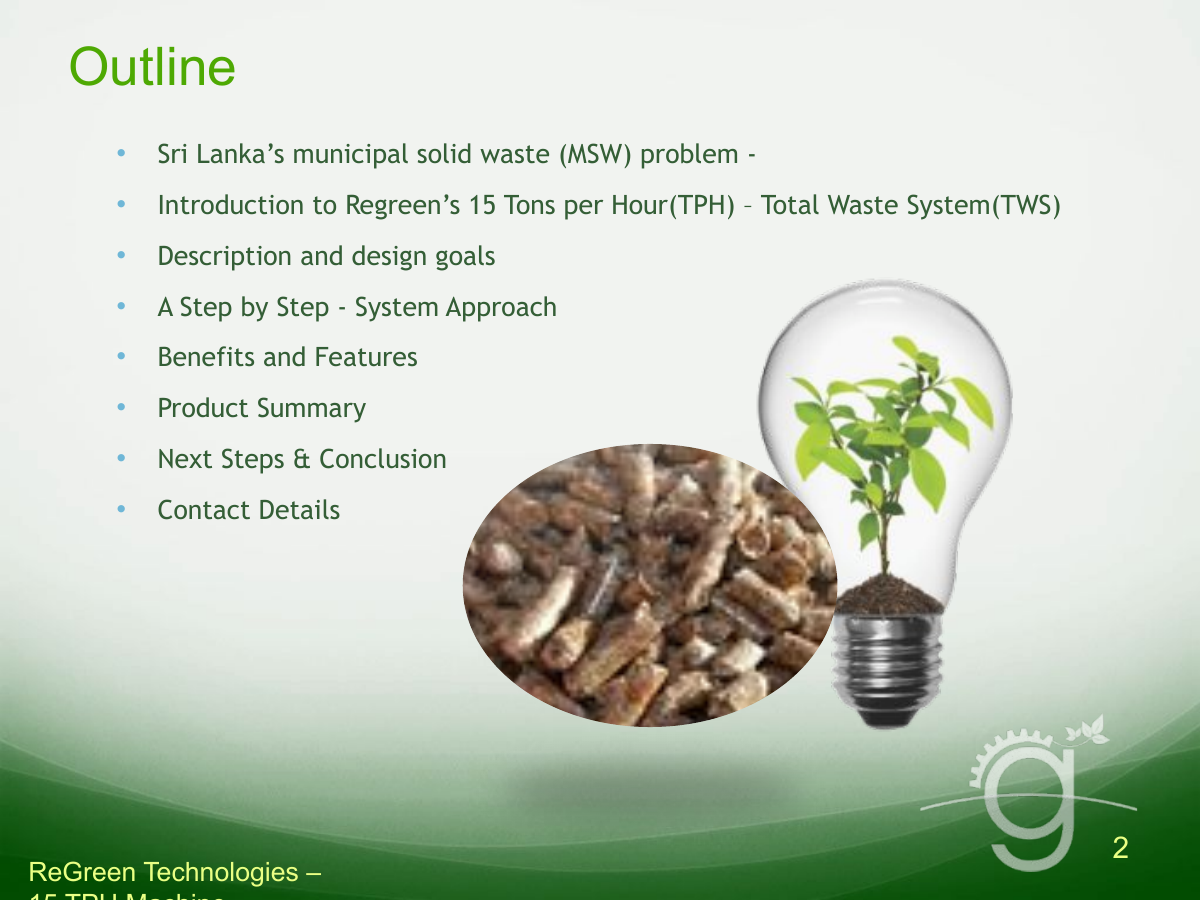
ReGreen cover slide about waste
Vendor cover. It is their pitch, not a figure from the model.

Report

Status
Financial feasibility. January 2024. Not a plant I operated.
File
Financial Analysis-Regreen-SJ-Jan 2024. Title on the sheet: Trilogy 3.4 MW waste to energy.
Plant
360 tonnes of waste a day. Net export 3.35 MW. 24.58 GWh a year. Availability 85%.
Money
USD 33.3 million. 70% debt, 30% equity. Interest 14%. Project return 12.71%. Equity return 10.22%.

What I built

The model prices a tariff of 53.26 rupees a kilowatt-hour, a tipping fee, and pellet sales, against a ReGreen 15-tonne-an-hour processor, a 4-tonne pyrolysis unit, and a 4 MW Caterpillar generator. Interest during construction is carried. The project life is 20 years.

What this does not claim

  • This is the first stage of one plant. The ~15 MW revision is the next stage, a separate file, not a separate project.
  • Heat rate and outages at Yugadanavi are a separate project. This file is the financial model only.

Stage 2 · ~15 MW revision

I rebuilt the same waste intake at a larger generation train. Net export is about 11 MW, not the 15 in the file name. The return jumps because the power revenue jumps.

KPI

11.0 MWNet power, 10.96 in the sheet
80.5 GWhEnergy export a year
USD 64.1mInvestment, before interest during construction
19.8%Project return, 20 years

Chart

Project return 19.8% Equity return 22.2%
Same 0–25% scale as the smaller plant, so the two models can be compared. Source: Financial Analysis-Regreen-Rev-SJ -15MW.

Picture

ReGreen steps: sort, pelletise, generate power
Vendor steps. This revision uses a 10 MW generator and a 5 MW generator, plus larger pyrolysis, in the cost sheet.

Report

Status
Revised financial feasibility. Not a plant I operated.
File
Financial Analysis-Regreen-Rev-SJ -15MW. Title on the sheet: Trilogy 15 MW waste to energy.
Plant
Still 360 tonnes a day. Net export 10.96 MW. 80.46 GWh a year.
Money
USD 64.1 million. 70/30 debt and equity. Project return 19.83%. Equity return 22.17%.

What changed from the 3.4 MW case

The waste intake stays. Generation does not. The cost sheet adds a 10 MW Caterpillar set and a 5 MW set, and larger pyrolysis. Equity return rises above the project return, which did not happen in the smaller model.

What this does not claim

  • The file name says 15 MW. The calculated net export is 10.96 MW. The page uses the calculated figure.
  • Same plant as the 3.4 MW stage. A later file, different capital, and a different return.

Back to Energy · All layers · Next project in this layer · US power and natural gas · shevaanjayasinghe@gmail.com

Back to Hardware All layers

MechatronicsSpring 2014CourseHardware

Hardware · Spring 2014One course, two parts

Mechatronics

One course at Embry-Riddle, Spring 2014. The lecture is ME 404, three credits. The lab is ME 404L, one credit. Grade A in both. The transcript is the record. It does not describe a machine.

Key points

  • ME 404, three credits, grade A
  • ME 404L, one credit, grade A
  • The transcript is the record; it does not describe a machine

Lecture · ME 404

Three credits. Grade A. The transcript is the record. It does not describe a machine.

Figures

Sense Decide Act
The shape of the subject. The transcript does not name a robot, a board, or a rig.

KPI

ME 404Mechatronics
3 creditsUpper-division mechanical engineering
A4.0 on a 4-point scale
Spring 2014Prescott transcript, conferred 2015

Chart

Grade points 4.0 / 4.0
An A is the top of the undergraduate scale on this transcript. The lab grade is the next part, not a second project.

Report

Source
Official Embry-Riddle transcript, issued 17 June 2024. Student 1572990.
Course
ME 404 Mechatronics. 3.00 credits attempted and earned. Grade A. 12 grade points.
When
Spring 2014. Degree conferred 11 May 2015, Bachelor of Science in Mechanical Engineering.

What the file shows

The lecture sits in the spring 2014 block with the mechatronics laboratory, advanced propulsion, and the humanities requirement. The master CV does not mention it. The transcript does.

What this does not claim

  • No project title, no photo, and no lab write-up are in the files. I am not describing a machine I cannot point to.
  • The laboratory is its own line on the transcript. It is the next part of this course.

Laboratory · ME 404L

ME 404L is the lab attached to the lecture. One credit. Grade A. Same term. Its own line on the transcript.

Figures

ME 404 3 credits · A ME 404L 1 credit · A
Two lines, one term, one course. This part is the lab line.

KPI

ME 404LMechatronics Laboratory
1 creditThe lab line
A4 grade points
Spring 2014With ME 404

Chart

Lab grade points 4 / 4
One credit, graded A, is 4 points. The bar is the grade, not a measured lab output. No output number is on the transcript.

Report

Source
Same official transcript, 17 June 2024.
Course
ME 404L Mechatronics Laboratory. 1.00 credit. Grade A. 4 grade points.
When
Spring 2014, listed with ME 404.

What the file shows

The laboratory is graded on its own. An A on one credit is the whole quantitative record.

What this does not claim

  • Drive has no mechatronics lab report, drawing, or photo under this name. None is shown.

Next project in this layer · Back to Hardware · All layers · shevaanjayasinghe@gmail.com

If you want the build behind one of these projects, write.

shevaanjayasinghe@gmail.com